
provisions journal | non-toxic interiors edit
intro to non-toxic interiors

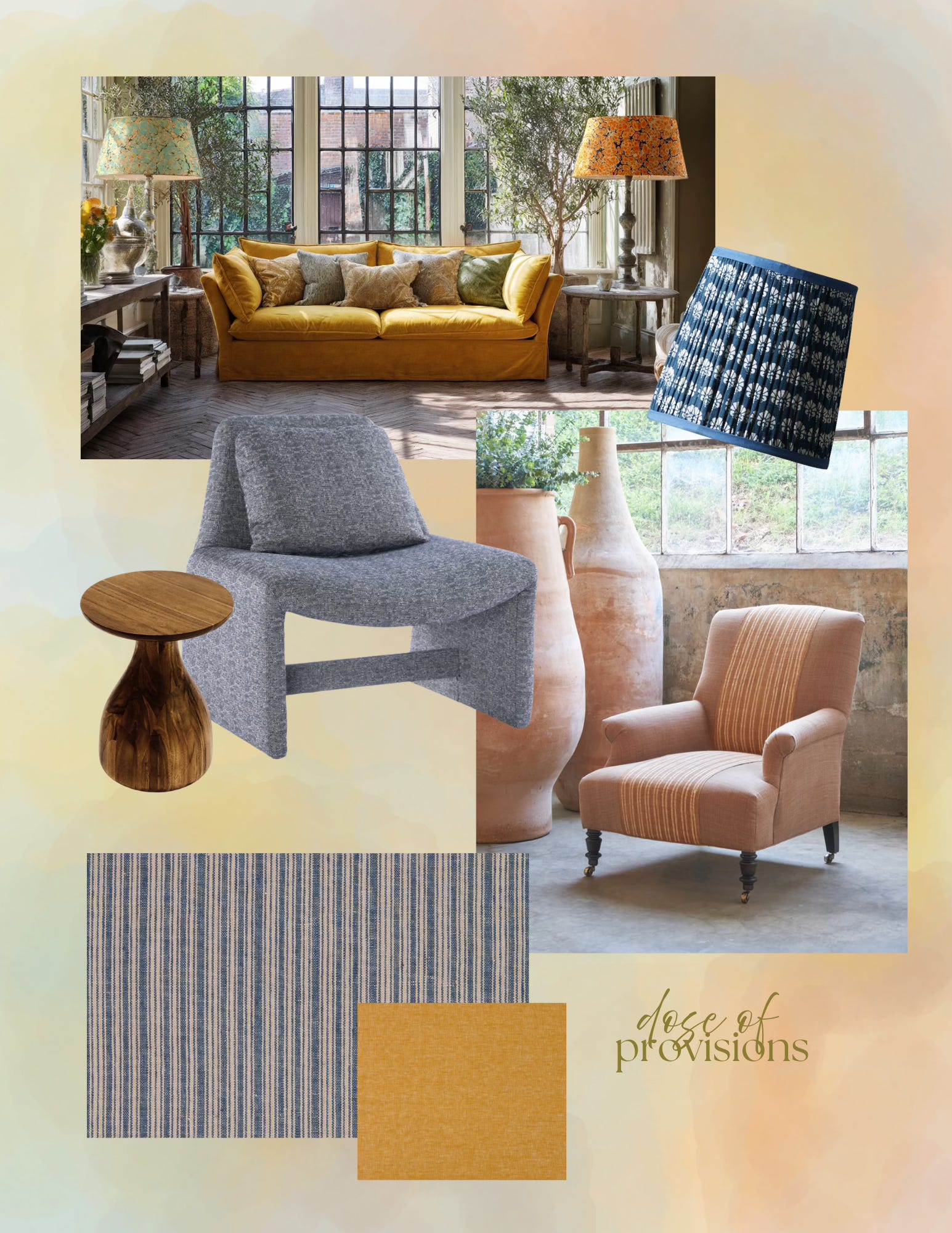
A few weeks ago I was on Instagram and a sofa stopped me mid-scroll. It was from a UK brand called Schplendid, and I had to check them out just from the yellow velvet sofa I saw on my feed. I scrolled through their website and ended up learning so much about a brand I had never heard of — especially their quality craftsmanship and materials. Eight-way hand-tied springs, ethically sourced goose down, wool and coconut husk instead of foam. It made me wonder how many other brands I'd somehow overlooked in nearly a decade of working in this industry. That moment was the spark for this series.
As a designer I've never really had a signature look. Working for a kitchen and bath design firm and for builders taught me that a well-designed space is one that reflects the people living in it. The client's vision was the only vision that mattered — not a designer's or builder's signature style, but a home that reflects the owner.


I've always believed a home should show that people actually live in it. Linens that soften with every wash, teak that weathers beautifully over time, rugs that get more beautiful as they wear — those are the things that make a house feel like a home. We've traded that patina for chemically treated fabrics and coatings, and I think we've lost something in the process. A home isn't meant to look like a showroom. It's meant to age with you.


A lot of the furniture and design industry operates the same way fast fashion does. Cheaply made pieces in synthetic fabrics, flat-pack casegoods built with MDF and particleboard that off-gases formaldehyde into your home — it’s the same cycle, just slower. We buy it because it’s affordable, then it breaks down or goes out of style, and we replace it. It’s not unlike how lower-end appliance brands have engineered their products to fail sooner — it keeps you buying and keeps them profitable. But if you invest in a well-made piece of furniture it will last decades, not five years. You pay a little more upfront or you pay for it again and again. Nobody asks what it’s made of or what it’s releasing into the air in the meantime.
What most people don’t know is that the durability of an upholstery fabric is measured in rub counts — the higher the number, the more durable the fabric. A good quality natural linen or wool can absolutely hold its own without chemical treatment. You just need to look for high double rub counts on the tag.
Natural fabrics like linen, cotton, and wool have been used in upholstery for centuries without chemical treatment. But somewhere along the way we traded all of that for performance fabrics treated with chemicals to resist staining and keep everything looking perfect — marketed as the practical sensible choice the same way quartz replaced natural stone.
The honest truth is that a sofa upholstered in a natural fiber will show life — a spill from a glass of wine, a dog with muddy paws, a drop of ice cream from a child. But it will also clean, it will soften, and it will become more beautiful over time. That is not a flaw. That is the whole point. It should age with you and tell the story of a home that was actually lived in.
We spend so much time and money creating a beautiful space and never stop to ask what it’s actually made of.
—
In February I attended IBS/KBIS in Orlando and sat in on a session on biophilic design, which shifted how I think about interiors. Living here in the Lowcountry I've always pulled from the landscape — the greens of the marsh, the blue tones from the water — and steered clients toward natural fibers like grasscloth, jute, and sisal. But the session made me realize I had only scratched the surface. True biophilic design goes further: living plants, solid wood, organic forms, maximizing views of the outdoors and connecting the outside to the space. It's something I want to lean into much more intentionally on projects going forward.
I don’t share all of this to create fear — more to bring awareness to the things surrounding us that we don’t know to question.
A FEW BRANDS LEADING THE WAY
What makes Schplendid worth the attention isn’t just the materials, it’s the transparency. Most furniture brands will tell you their sofa is “high quality” without ever explaining what that means or what their pieces are actually made of. Schplendid tells you exactly what’s inside: eight-way hand-tied coil springs that work together as a system rather than sinuous springs that wear unevenly over time, ethically sourced Italian goose down for the cushions, and coconut husk and wool as an alternative to the standard petrochemical foam. Their fabric options include natural linen, cotton, and velvet, and they offer free fabric samples so you can feel the quality before you commit. The Vesper loveseat starts at £2,060, which in the context of a piece built to last thirty years is a very different conversation than an $800 sofa you’ll have to replace every five years. They only deliver in the UK for now, but worth knowing as the standard every furniture brand should be held to.
—
Cisco Home is a brand I had known about as a designer for a few years, and what I appreciate about them now more than ever is that the commitment to natural materials has always been there. I just wasn’t looking at their brand the way I am now. Their upholstery fabrics include linen, cotton, and wool options across their line. The Inside Green Fill upgrade replaces conventional foam, which is typically made with petroleum-based chemicals and flame retardants, with a natural alternative that doesn't carry the same chemical load. And if you want to go further, the Para Pure cushion upgrade takes it all the way to entirely natural materials. It's an option worth asking about when you order. Their line is available through designers and select retailers.
—
What I love most about Greenrow is that the sustainability isn't a rebrand or a marketing angle, it's built into how they design everything. Every product is designed to be reused, repaired, and passed down. They use responsibly sourced linen, cotton, wood, and recycled materials. Their wood pieces carry GREENGUARD certification, verified free of harmful chemical emissions through third-party testing. Their packaging is free of single-use plastic, using recyclable cardboard and tape. And the design is beautiful — the printed lampshades, the color choices, the mix of traditional frames with a modern twist. One thing worth knowing: Greenrow is a Williams-Sonoma brand, which may matter to some. But their sustainability commitments are genuine and the quality speaks for itself. Beyond furniture they also sell homewares, so it's a great brand to explore even if their furnishings aren't your style.
—
The teak in each MasayaCo piece comes from forests they planted themselves, with over a million trees planted and every purchase contributing to that number. Their FSC certification means the wood is responsibly sourced, but the reforestation mission goes well beyond certification. These are pieces you can actually trace, which is something the design industry rarely offers. As I mentioned, their woven cord is made from 100% polyester, so for those avoiding synthetics entirely I'd focus on their solid teak pieces, especially if you're looking for sustainable outdoor furniture.
—
Other sources worth exploring
Not everyone can invest in Schplendid or Cisco Home right away — and that’s okay. Don’t overlook antique stores and thrift shops. Older furniture was almost always built with solid wood, eight-way hand-tied springs, natural materials made to last. Even if you find a piece in a color you don’t love, you can always paint it. That's what I've done with several pieces in our own home using Farrow & Ball paint — water based, made with natural pigments, and low VOC, so none of the harsh fumes you get with conventional paint. Also worth sharing that IKEA’s frames are PFAS-free — treat them as a foundation piece to slipcover in natural linen rather than a forever sofa.
A designer’s note on natural fabrics for upholstery
You don’t have to accept a performance fabric just because a retailer tells you it’s the practical choice. Natural fabrics like linen, cotton, wool, and mohair have been used in upholstery for centuries without chemical treatment. The durability of a fabric is measured in rub counts, which tells you how many times a fabric can be rubbed before it starts to show wear. A fabric with 15,000 rubs is suitable for light residential use. 30,000 rubs is general residential. 100,000 rubs and above is considered heavy duty or commercial grade. A good quality natural linen or wool can absolutely meet residential durability standards without any chemical treatment, and the count on the tag will tell you that.
When you’re shopping, look for:
100% linen, cotton, wool, or mohair — any blend that includes polyester is worth questioning
No stain-resistant or water-repellent finish listed — these are almost always chemical treatments
OEKO-TEX Standard 100 certification — guarantees the fabric has been tested for harmful substances
Undyed or naturally dyed options where possible — synthetic dyes are another source of chemical exposure in upholstered furniture
xx
Victoria
The Provisions Shortlist
Brands from this post worth exploring.
Furniture
Schplendid — schplendid.com · handmade, natural materials, full transparency · UK only
Cisco Home — ciscohome.net · natural fabrics, Inside Green Fill and Para Pure upgrade
Greenrow — greenrow.com · responsibly sourced, Fair Trade certified, designed to last
MasayaCo — masayaco.com · FSC-certified teak · note: woven cord is 100% polyester
IKEA — ikea.com · PFAS-free frames, accessible price point · note: upholstery fabrics are largely synthetic — best treated as a foundation frame to slipcover in natural linen rather than a forever sofa
Also worth knowing
The Citizenry — the-citizenry.com · fair trade artisan-made rugs, textiles, and ceramics · all-natural materials, GOTS and OEKO-TEX certified
GOODEE — goodeeworld.com · curated ethical home marketplace worth exploring · note: not all products are non-toxic — some include recycled plastic and synthetic materials, so check individual items before purchasing
If you found something here worth sharing, send it to a friend and invite them to join the collective — more provisions coming soon.
A note: some links in this post are affiliate links. This never influences what I recommend — I only share products we genuinely use or brands we trust.